
Carbon impact and responsible design
Our ambition is to deploy ecologically and economically relevant solutions on a large scale.
We have managed to implement technologies that radically increase production yields while gradually offsetting the initial investment in financial terms and carbon debt.
In addition, we also seek to strengthen the biodiversity and resilience of spaces by offering agronomic techniques derived from organic market gardening.
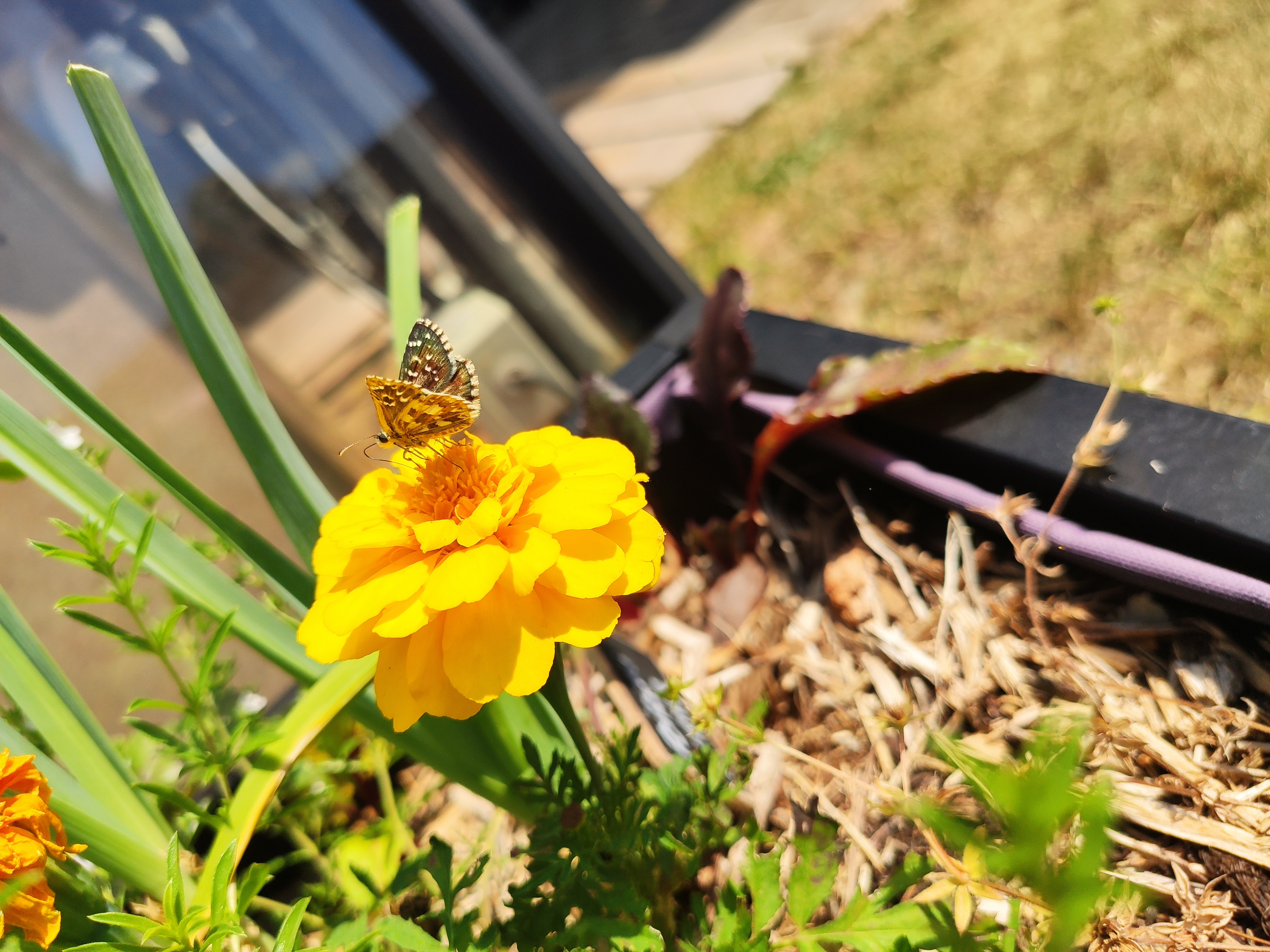
Regenerating biodiversity with modern techniques
By decentralizing home food production with sustainable cultivation techniques, we avoid most of the harmful externalities of conventional agriculture:
• Use of pesticides / herbicides / fungicides (no use of chemical pesticides)
• Water use (reduced by 90% - mainly recycled)
• Land use (vertical techniques using less space with higher yields)
• Use of monoculture (compared to 147 different species during the year)
We offer seasonally adapted crops and vegetables in a semi-open environment that promotes local biodiversity.
The biological heart of our solution composed of organic nitrogen, beneficial bacteria and mycorrhizae that gradually grows. It is then used inside and outside the greenhouse to build a productive and resilient biological anchor.
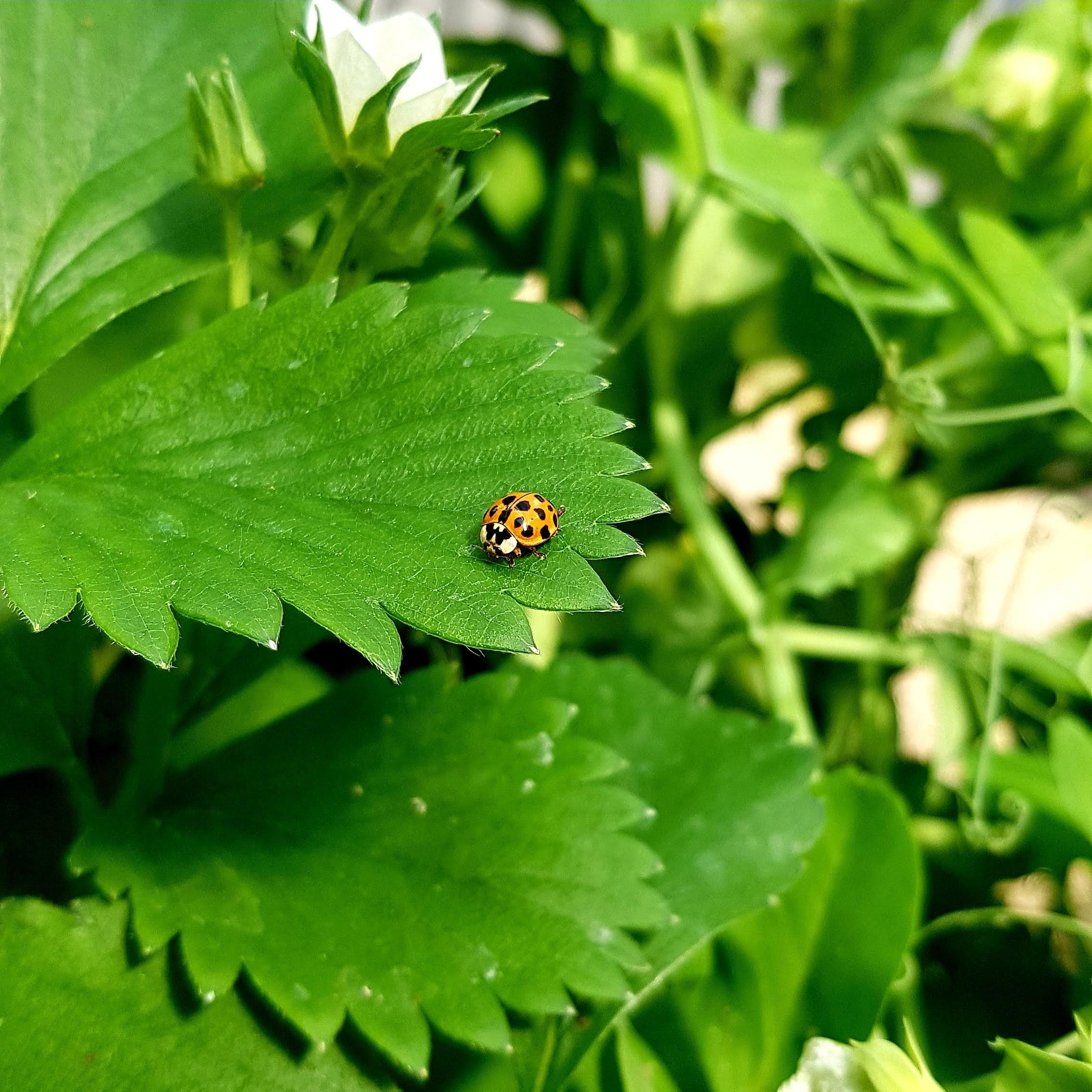
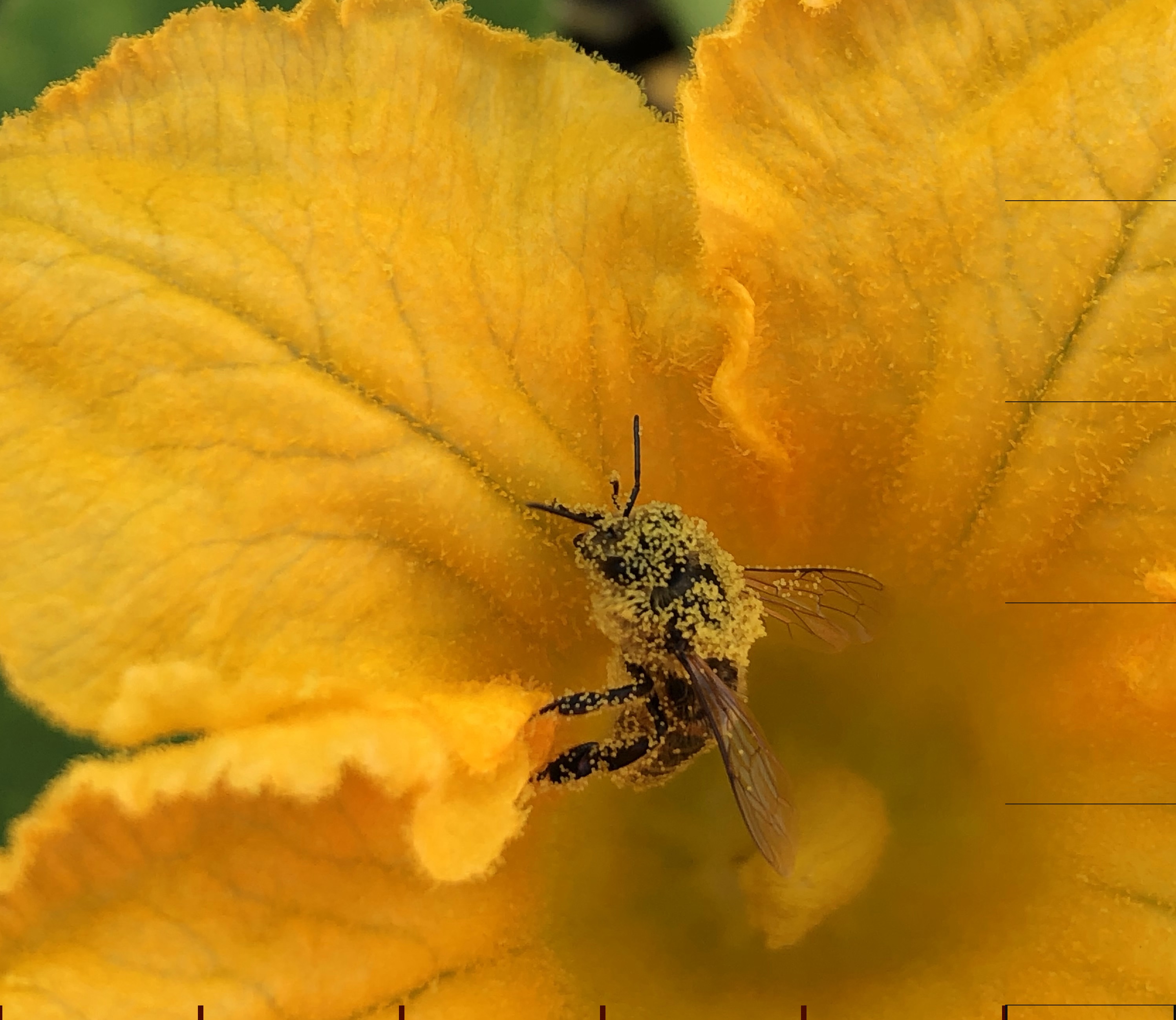
After a few months of use, most users report that useful insects multiply in their garden (butterflies, ladybugs, bees, worms).
Global warming and carbon debt
Conventional fruit and vegetable production has several environmental impacts, including CO2 emissions.
These emissions are due to the mode of production, transport and preservation of foodstuffs.
As a first approximation, for one kilo of plant produced, we have one kilo of CO2 emitted (1).
Through ultra-local and ultra-cool production, our solutions gradually offset their carbon debt over their life cycle (marginal energy consumption, less transportation, less food waste, etc.).
Each year, it is at least 400kg of CO2 saved by production alone.
Saving water in a greenhouse
In Molsheim, we measured the water used in permaculture: for a greenhouse of 22m², it is about 10m³ annually of which 6m³ come from water recovery.
In comparison, a conventional garden of 100m² used for 5 months requires up to 100m³. The amount of water supplied is estimated at 15 to 20L per m² of garden with a number of waterings varying from one to 4 per week depending on the months of operation.
Our results confirm that our aquaponic / bioponic systems consume 90% less water than traditional agriculture (2)(3).
Sober and relevant technologies for humanity
We use technologies in a reasoned way.
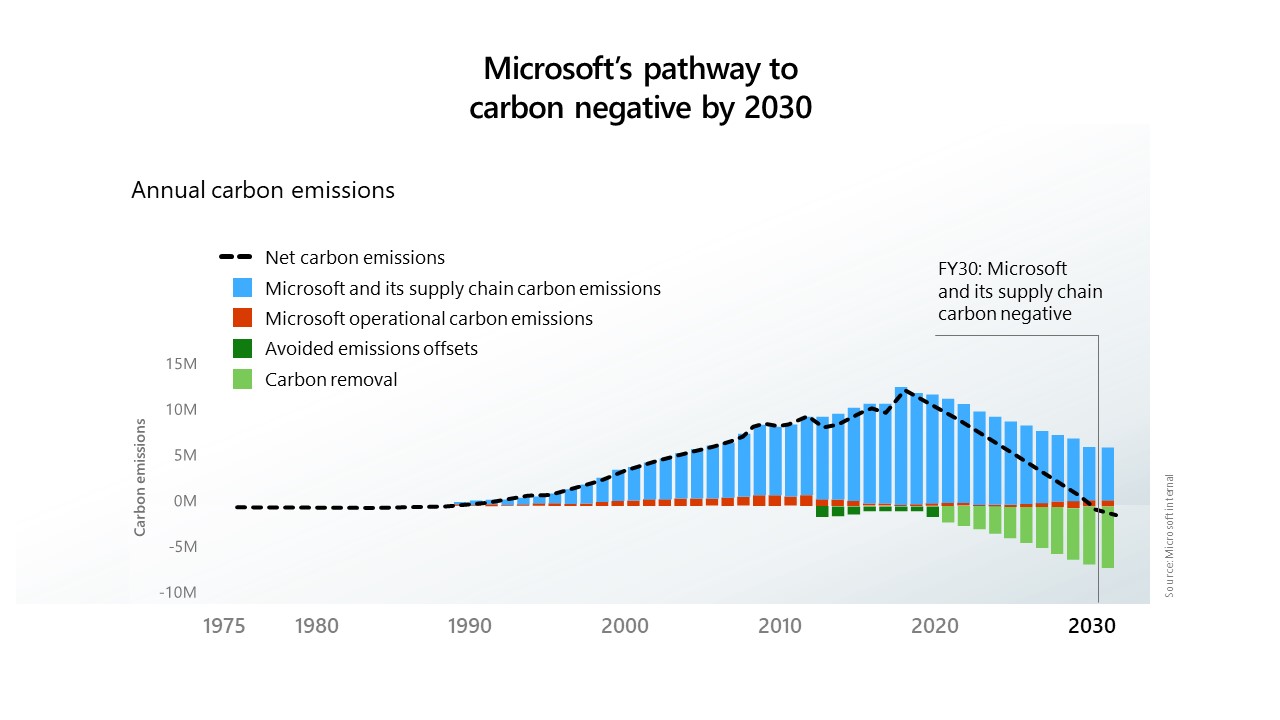
Data usage is measured and represents, in total, since the creation of myfood less than 5GB on low-carbon servers (4).
Also, the Sigfox operator makes it possible to connect our greenhouses in an economical and ecological way thanks to the sending of a few bytes of data.
That's the equivalent of one text message every 30 minutes.
The use of solar panels is even more relevant in countries where the production of electrical energy is highly carbon-based (Germany, Luxembourg, etc.).
Choice of materials and life cycle study
The environmental impacts of the greenhouse are assessed from “cradle to grave” i.e. from raw material extraction to final waste management .
The equipment life cycle includes the production and transportation of greenhouse components, the use of the greenhouse as an agricultural production system, and the treatment of end-of-life infrastructure decommissioning waste.
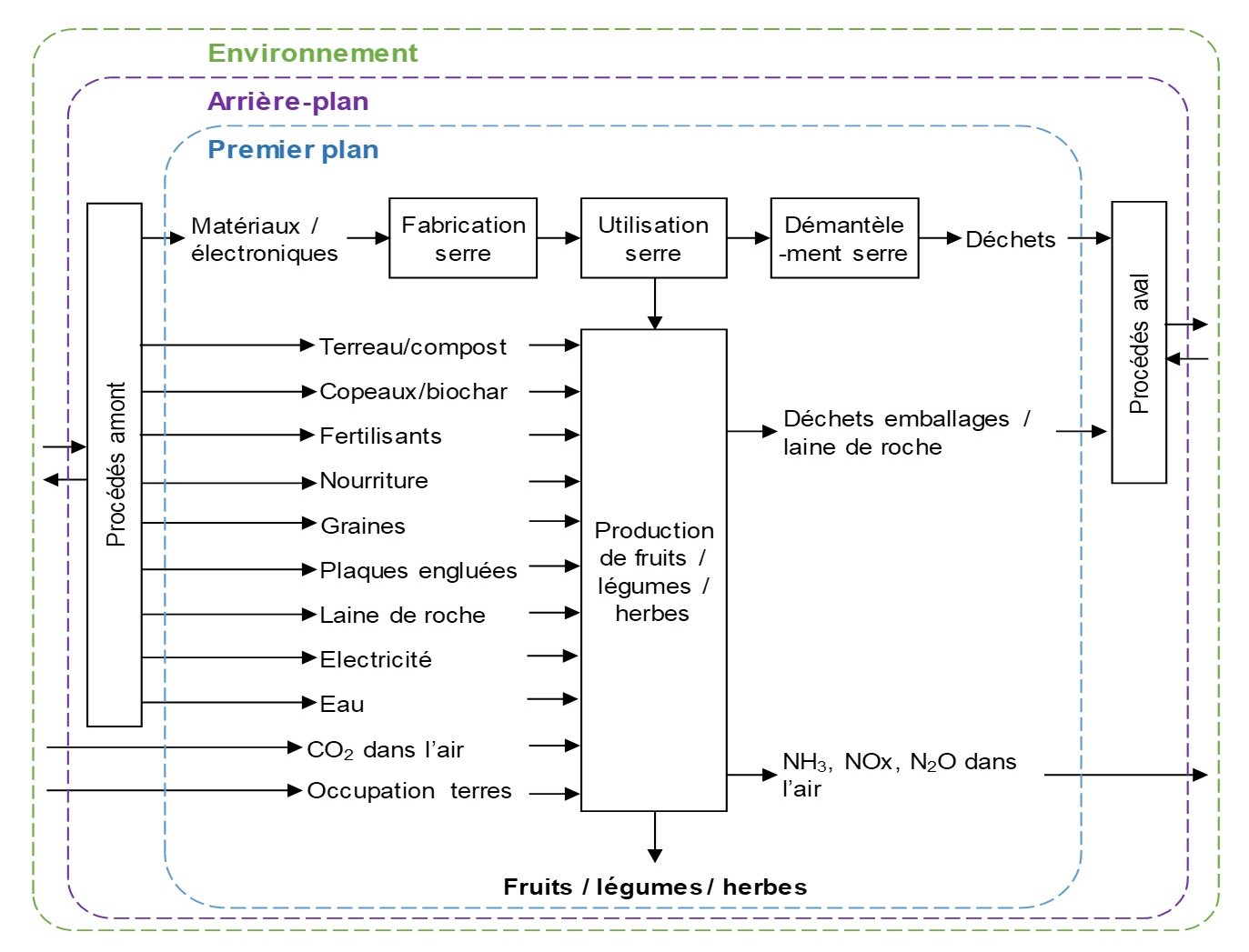
Boundaries of the Connected Greenhouse Life Cycle Study.
Most of our suppliers are located in Europe, while some electronic components are sourced from North America.
Here is an overview of the geographic layout of our key partners:
| Components | Country of Manufacture |
|---|---|
| Greenhouse and equipment | Belgium |
| Wood structure | France |
| Tour de culture | France |
| Electronic component | France, Switzerland, USA |
| Basin | Germany |
| Solar panel | Italy |
| Pellet Stove | Italy |
| Culture tank | Portugal |
| Agronomic equipment (soil, seed) | France |
We prefer the most durable and robust materials in accordance with operations over several decades.
Third-party expert audits and certifications
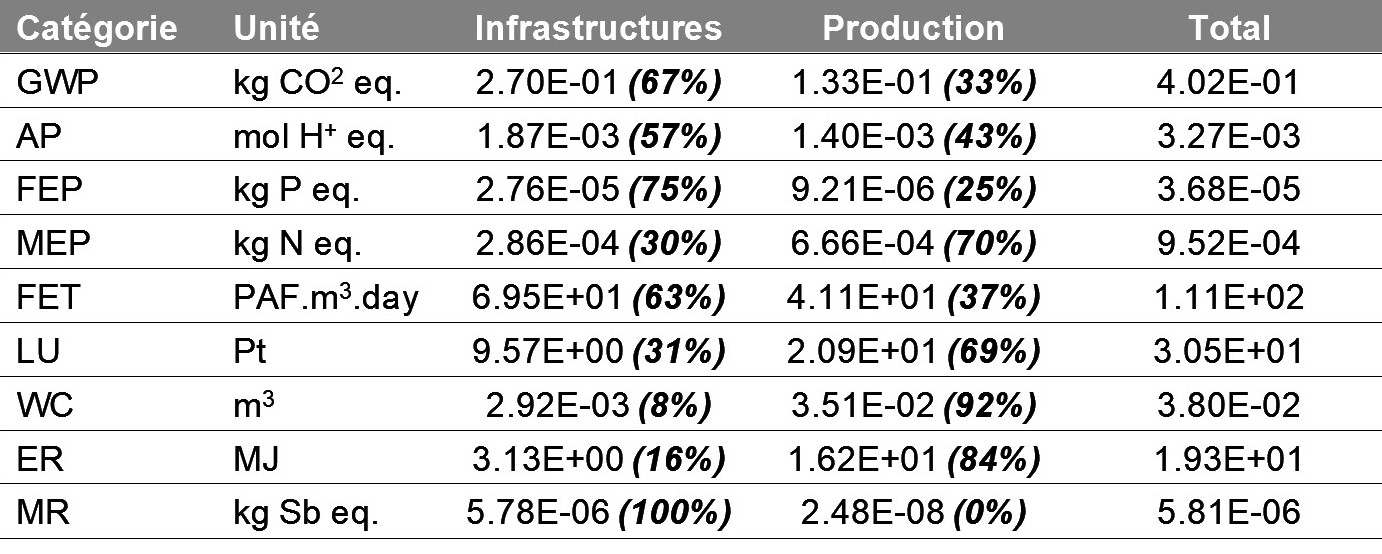
In 2019, we had an environmental impact study carried out on our Family model (manufacturing, transport, operation, end of life) which includes different aspects.
| Category | Unit | Abbrev. | Characterization |
|---|---|---|---|
| Climate change | kg CO2 eq. | GWP | 100-Year Integrated Radiative Forcing Relative to Carbon Dioxide |
| Freshwater Eutrophication | kg P eq. | FEP | Increased phosphorus concentration in water |
| Marine Eutrophication | kg N eq. | MEP | Increased Nitrogen Concentration in Water |
| Aquatic Ecotoxicity | PAF.m3.day | FET | Fraction of aquatic species potentially affected by toxic effects |
| Acidification | mol H+ eq. | AP | Exceeding critical load for terrestrial ecosystems due to deposition of acidic substances |
| Land use | - | LU | Soil quality index combining biotic production, erosion resistance, mechanical filtration and groundwater recharge |
| Water consumption | m3 | WC | Amount of extracted water no longer available for the watershed |
| Mineral Resource Utilization | kg Sb eq. | MR | Ultimate reserves compared to antimony |
| Use of energy resources | MJ | ER | Cumulative net calorific value |
The first results are suitable with a positive environmental impact over several years of operation.
On the other hand, we were audited by the expert teams of the Solar Impulse Foundation who recognized our approach as "Efficient and Sustainable".
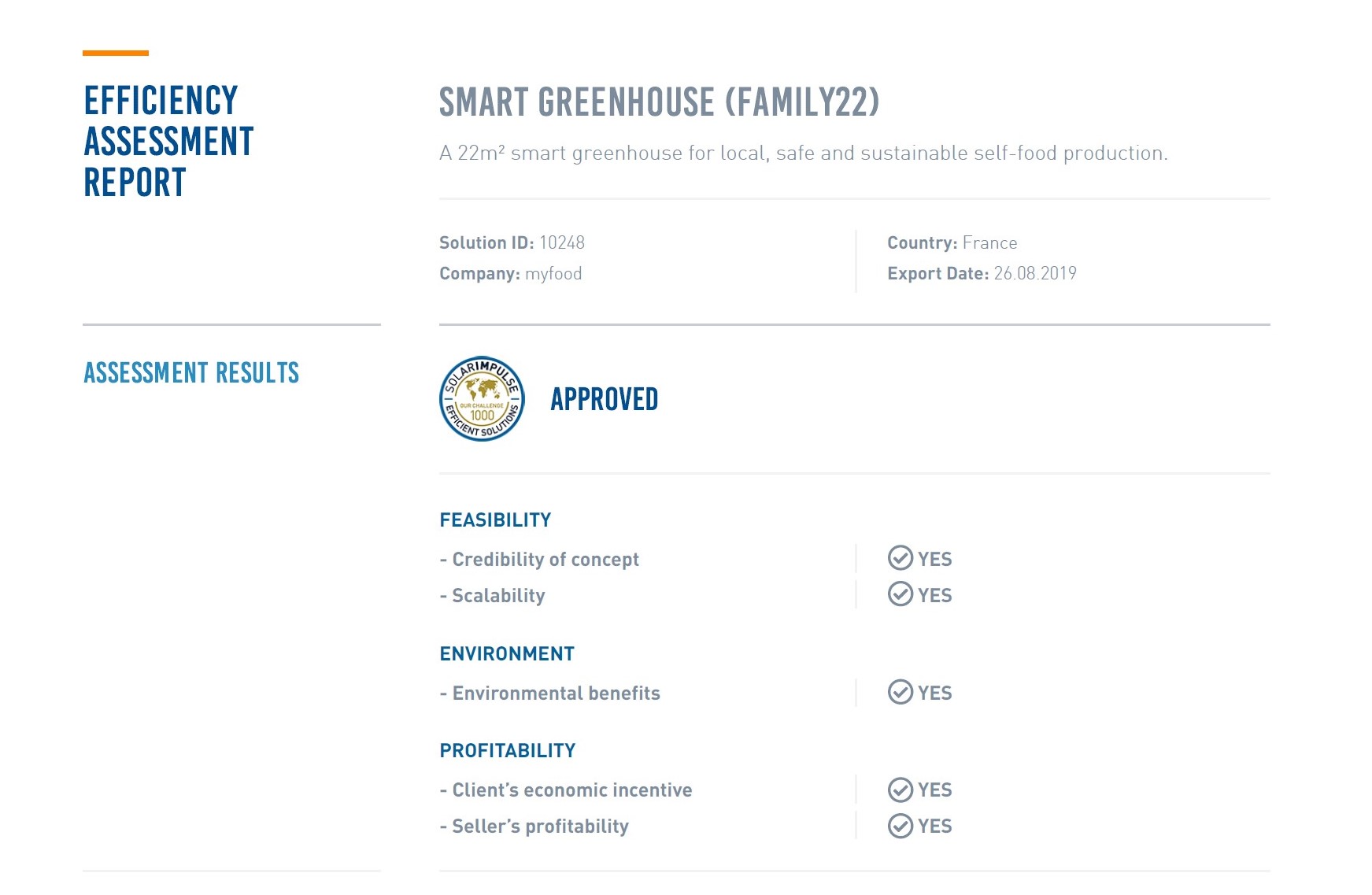
"Efficient Solution" label received in August 2019
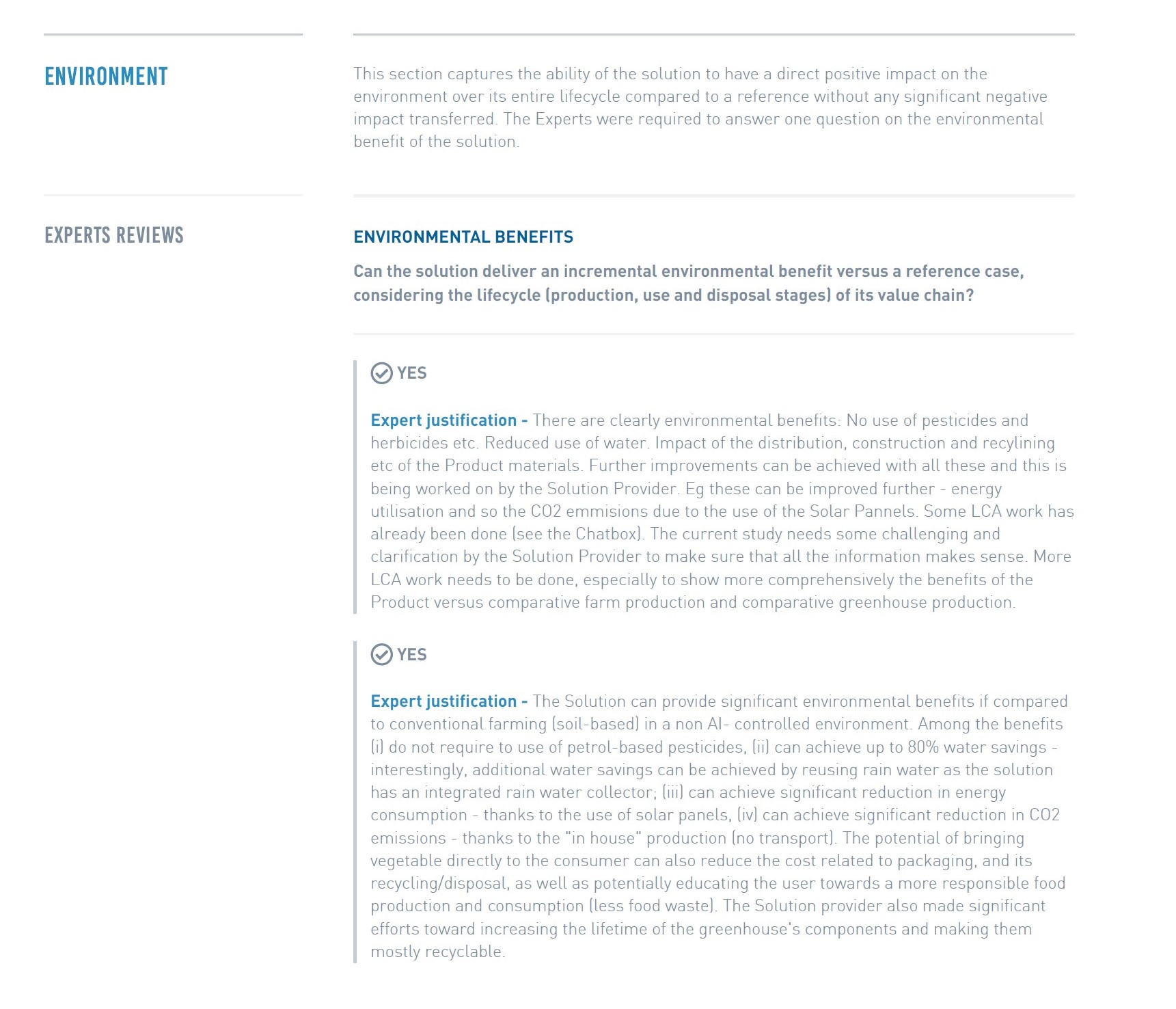
Experts' report on the environmental part.
In a spirit of continuous improvement, we seek through our research and development projects ever more innovative axes to deploy among the Pioneers.
We have partnered with many laboratories and specialized schools to push our vision ever forward.
Sources
(1). https://www.bilans-ges.ademe.fr/documentation/UPLOAD_DOC_EN/index.htm?repas.htm
(2). https://www.stiga.com/fr/magazine/tendances-et-conseils/arrosage-eau
(3). Aquaponic Food Production System edited by Simon Goddek, Alyssa Joyce, Benz Kotzen, Gavin M. Burnell
(4). https://blogs.microsoft.com/blog/2020/01/16/microsoft-will-be-carbon-negative-by-2030/
(5). https://www.sigfox.com/en/what-sigfox/technology
(6). https://solarimpulse.com/efficient-solutions/smart-greenhouse